
Devon Hansen · 19 October 2026
Strategies for Enhancing Cross-Device Consistency in Standalone Knowledge Capture Applications for Field-Based Analysts
Standalone knowledge capture applications support field-based analysts who collect observations, measurements, and notes in locations where internet access remains unreliable or absent for extended periods, and these tools rely on local databases that later synchronize across multiple devices such as tablets, smartphones, and laptops once connectivity returns.
Researchers have documented that inconsistent data states across devices lead to duplicated entries, overwritten notes, and lost context during fieldwork, which prompts development teams to prioritize synchronization protocols that maintain identical records regardless of the device in use at any moment.
Core Challenges in Maintaining Data Uniformity
Field analysts frequently switch between devices mid-task because one tool offers better battery life while another provides superior input methods, yet applications must ensure that annotations made on a smartphone appear identically formatted and timestamped when viewed on a laptop later that day.
Studies from academic institutions reveal that latency in detecting changes across offline caches creates merge conflicts, and this issue intensifies when multiple analysts contribute to shared datasets even in standalone configurations that later export to central repositories.
Synchronization Protocols and Offline-First Architectures
Developers implement event-sourcing patterns where every edit generates a timestamped log entry stored locally, allowing devices to replay changes in sequence upon reconnection and thereby reduce the chance of conflicting versions emerging during reconciliation processes.
According to reports from the National Institute of Standards and Technology, structured data schemas combined with unique identifier assignment for each captured item enable reliable merging without requiring constant server mediation, which suits the intermittent connectivity patterns common in field environments.
Version Control and Conflict Resolution Methods
Applications employ three-way merging algorithms that compare the current local state against the last known synchronized version and the incoming changes from another device, then present analysts with clear options for accepting, rejecting, or manually editing resolutions when automated logic encounters ambiguities.
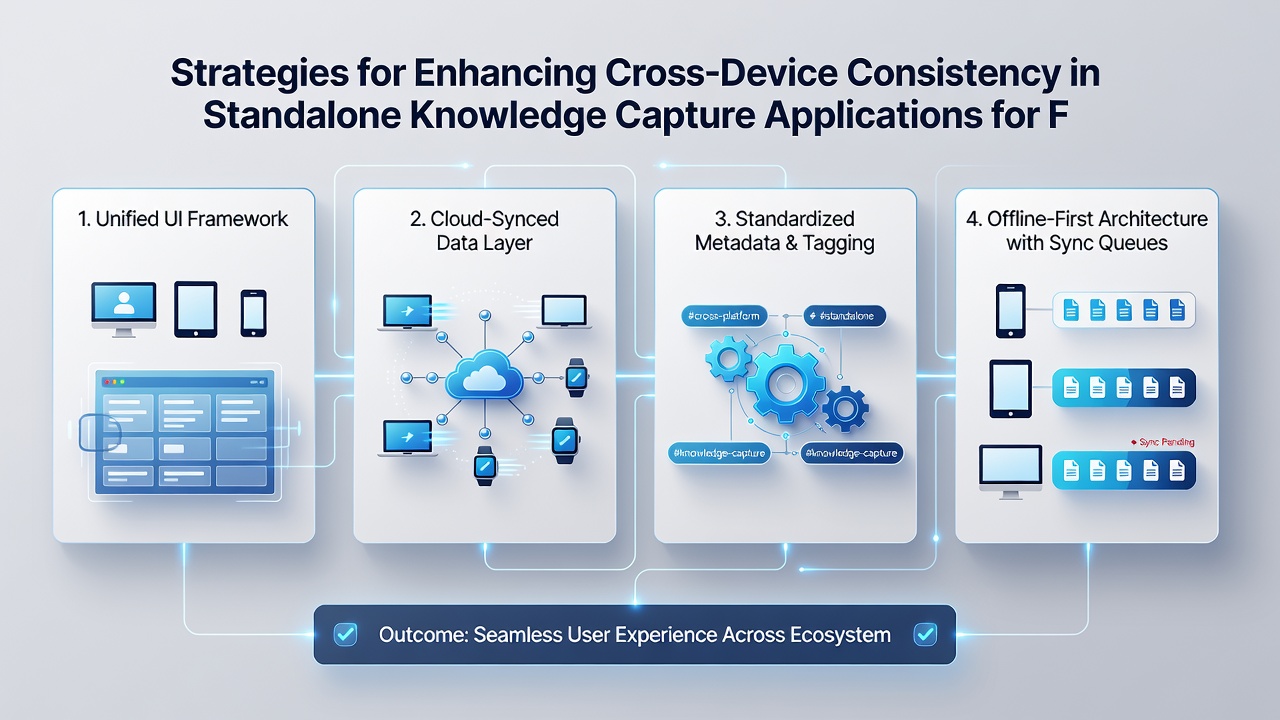
Those who have examined large-scale deployments note that automatic conflict detection based on semantic similarity rather than simple byte comparison preserves analyst intent more effectively, particularly when notes include structured tags alongside free-text descriptions.
Interface Consistency Across Hardware Platforms
Design guidelines from the European Commission on digital accessibility recommend responsive layouts that adapt visual elements while preserving functional parity, so analysts encounter the same menu structures, search filters, and export options whether operating on a ruggedized tablet or a compact phone during October 2026 field trials of updated software versions.
Font rendering, icon placement, and gesture mappings receive careful calibration to prevent muscle memory disruption when users transition between devices, and testing protocols now incorporate simulated offline periods followed by immediate multi-device sync checks to validate uniformity under realistic conditions.
Security Measures Supporting Consistent Access
Encryption at rest combined with device-specific key derivation ensures that data remains protected yet accessible across authorized hardware without exposing synchronization traffic to interception risks, and regional frameworks such as those outlined by Australian government digital standards emphasize audit logs that track every cross-device transfer.
Analysts benefit from role-based permissions embedded directly in the local data model so that even when working offline the application enforces the same access rules that will apply after synchronization completes.
Conclusion
Effective strategies for cross-device consistency combine robust local storage, sequenced synchronization, and adaptive interfaces to deliver reliable performance for field-based analysts who depend on uninterrupted knowledge capture regardless of hardware or connectivity fluctuations, with ongoing refinements driven by data from international standards bodies and practical deployments worldwide.